
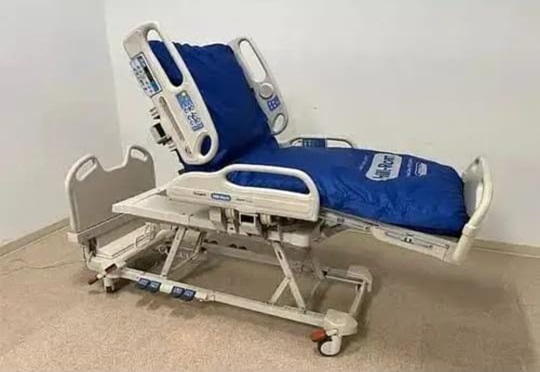
Types of Hospital Beds Explained – Which One Does Your Patient Actually Need?
Hospital beds
Not all hospital beds are the same.
- Walk into any medical supplier in Pakistan and you’ll see 10 different options staring back at you.
- Manual.
- Semi-electric.
- ICU. Fowler.
- Orthopaedic.
- Bariatric.
It’s overwhelming.
But here’s the thing — picking the wrong types of hospital beds for your patient can slow down recovery, make caregiving harder, and cost you more in the long run.
This guide helps you a lot in choosing the right bed for your beloved one.
By the end, you’ll know exactly which type fits your patient’s needs — and why.
Why Does the Type of Hospital Bed Matters?
- A hospital bed is not just a place to sleep.
- It’s a recovery tool.
- The right bed reduces pressure sores, supports breathing, makes repositioning easier, and protects the patient from falls.
- The wrong bed does the opposite.
So before you spend a single rupee — understand the types of hospital beds available and what each one actually does.
The 3 Main Types of Hospital Beds
All hospital beds fall into three main categories based on how they’re powered.
1. Manual Hospital Bed
The most basic — and most affordable.
- A manual hospital bed uses hand cranks to adjust the head, foot, and height of the bed.
- No electricity required.
Who it’s best for:
- Short-term home recovery
- Areas with frequent power outages
- Budget-conscious families
- Patients who don’t need frequent repositioning
Key features:
- Hand cranks at the foot of the bed
- Adjustable headrest and footrest
- Side safety rails
- Locking wheels
Hospital bed price for manual: starts from PKR 25,000 in Pakistan.
Limitation: Caregivers must physically crank the bed every time. Tiring for long-term use.
- Semi-Electric Hospital Bed
The middle ground.
A semi-electric hospital bed uses electric motors to control the head and foot positions — but height is still adjusted manually with a crank.
Who it’s best for:
- General ward recovery
- Home care where moderate repositioning is needed
- One caregiver managing alone
- Facilities on a mid-range budget
Key features:
- Electric buttons for head and foot adjustment
- Manual height adjustment
- Hand pendant or side panel controls
- Safety side rails
Hospital bed price for semi-electric: PKR 55,000 to PKR 95,000 in Pakistan.
Limitation: Height adjustment still requires manual effort — not ideal for ICU or emergency settings.
3. Full Electric Hospital Bed
The most convenient.
A full electric hospital bed gives complete remote control — height, head, foot, and knee positions — all with a button.
No physical effort required from the caregiver.
Who it’s best for:
- Long-term patients
- Elderly care at home
- Patients with paralysis or limited mobility
- Post-surgery recovery requiring frequent repositioning
Key features:
- Remote control or hand pendant for all adjustments
- Multiple positions — Fowler, semi-Fowler, Trendelenburg
- Safety side rails with control buttons
- Bed exit alarm (on advanced models)
- Easy-clean surfaces
Hospital bed price for full electric: PKR 70,000 to PKR 200,000 in Pakistan.
Limitation: Higher cost. Requires electricity. Needs occasional motor maintenance.
Types of Hospital Beds by Medical Use
Beyond the power type — hospital beds are also categorised by their medical purpose.
ICU Hospital Bed
- It is designed for critically ill patients in intensive care.
An ICU hospital bed is the most advanced type available.
Key features:
- Full electric adjustment — head, foot, height, and full tilt
- Trendelenburg and reverse Trendelenburg positioning
- CPR quick-flat function (bed flattens in one touch)
- Weighing scale integrated into the bed
- Lateral tilt for repositioning without lifting
- Compatible with ventilators, IV poles, and monitoring equipment
- High weight capacity (200+ kg)
- 5 to 7 function control
Who needs it:
- Critically ill patients at home or in a facility
- Post-cardiac or post-surgical intensive care
- Patients requiring constant repositioning
- Home ICU setups
Hospital bed price for ICU: PKR 150,000 to PKR 500,000+ in Pakistan.
Fowler and Semi-Fowler Hospital Bed
- A Fowler bed allows the patient to sit upright at 90 degrees.
- A semi-Fowler bed provides partial backrest elevation — usually 30 to 45 degrees.
Who needs it:
- Patients with breathing difficulties
- Post-feeding positioning
- General ward recovery
- Patients needing head elevation for circulation
Most semi-electric and full electric beds include Fowler positioning as a standard feature.
Orthopaedic Hospital Bed
- It is designed specifically for bone, joint, and muscle recovery.
- An orthopaedic hospital bed supports patients recovering from fractures, hip replacements, spine surgery, or joint procedures.
Key features:
- Firm, supportive base
- Traction attachment compatibility
- Adjustable sections to reduce pressure on specific joints
- Low height settings for safe patient transfers
Who needs it:
- Post-fracture recovery
- Hip or knee replacement patients
- Spine surgery recovery
- Patients in traction
Bariatric Hospital Bed
Built for heavier patients.
- A bariatric hospital bed has a wider frame and higher weight capacity than standard models.
- Standard hospital beds support up to 200–250 kg. Bariatric beds support 300 kg and above.
Who needs it:
- Obese or overweight patients
- Anyone above 200 kg body weight
- Patients needing wider sleeping surface
Paediatric Hospital Bed
Designed specifically for children.
- A paediatric hospital bed is smaller in size with full-length side rails to keep children safe.
- Some models have colourful designs to make the hospital environment less frightening for young patients.
Who needs it:
- Children in hospital recovery
- Paediatric wards and children’s clinics
- Home recovery for young patients
Ultra-Low Hospital Bed
Built for fall prevention.
- An ultra-low hospital bed sits closer to the floor than standard beds.
- It’s designed for patients at high risk of rolling or falling out of bed — like confused elderly patients or those with neurological conditions.
Who needs it:
- Elderly patients prone to falling
- Patients with dementia or delirium
- High fall-risk patients
What Is a 50 Bedded Hospital?
A 50 bedded hospital simply means a hospital with a capacity of 50 patient beds.
It’s a common size for:
- District-level hospitals in Pakistan
- Private hospitals in smaller cities
- Specialised clinics with inpatient wards
The bed count refers to the total number of patients a hospital can accommodate at any time — not a specific bed type.
Hospitals are categorised by bed count — 25 bedded, 50 bedded, 100 bedded, and so on — as it reflects their care capacity and licensing level in Pakistan.
Which Type of Hospital Bed Is Right for Your Patient?
Use this quick guide:
| Situation | Best Bed Type |
| Short-term home recovery | Manual Hospital Bed |
| One caregiver managing at home | Semi-Electric Bed |
| Elderly long-term care | Full Electric Bed |
| Critical illness at home or clinic | ICU Hospital Bed |
| Breathing or circulation issues | Fowler Bed |
| Bone/joint/spine recovery | Orthopaedic Bed |
| Overweight patient | Bariatric Bed |
| Child recovery | Paediatric Bed |
| High fall risk patient | Ultra-Low Bed |
Match the bed to the patient’s condition — not to the price tag.
Where to Get All Types of Hospital Beds in Pakistan?
All major types of hospital beds are available in Pakistan.
eSmart Home Healthcare in Rawalpindi and Islamabad stocks manual, semi-electric, full electric, and ICU beds.
They offer same-day delivery, home demos, and both buying and rental options across all major areas of the twin cities.
FAQ’S
What are the types of hospital beds?
The main types of hospital beds are: manual, semi-electric, and full electric — based on how they’re powered. By medical use, the types include ICU beds, Fowler beds, orthopaedic beds, bariatric beds, paediatric beds, and ultra-low beds.
What is the difference between a manual and electric hospital bed?
A manual hospital bed uses hand cranks to adjust positions — no electricity needed. A full electric bed uses remote-controlled motors for all adjustments. Semi-electric is the middle ground, with electric controls for head and foot but manual height adjustment.
What is a Fowler hospital bed?
A Fowler hospital bed allows the patient to sit upright at 90 degrees. A semi-Fowler position elevates the backrest to 30–45 degrees. It’s used for patients with breathing issues, during feeding, or for general comfort.
What is an ICU hospital bed?
An ICU hospital bed is a fully electric, advanced medical bed designed for critically ill patients. It includes Trendelenburg positioning, CPR quick-flat function, lateral tilt, and compatibility with ventilators and monitoring equipment. ICU bed prices in Pakistan start from PKR 150,000.
What does 50 bedded hospital mean?
A 50 bedded hospital means the facility has the capacity to accommodate 50 patients at one time. It refers to the total bed count — not a specific bed type. It’s used to classify hospital size and licensing in Pakistan.
Which hospital bed is best for elderly patients at home?
A full electric hospital bed is best for elderly patients at home. It allows the caregiver to adjust all positions remotely without physical effort — reducing caregiver fatigue and keeping the patient comfortable and safe.
Which hospital bed is best for home use in Pakistan?
For general home use, a semi-electric hospital bed gives the best balance of features and cost. For long-term or elderly care, a full electric bed is worth the extra investment. Manual beds are great for short-term and budget-limited situations.
How to adjust a hospital bed?
How to adjust a hospital bed depends on the type you have.
For a manual hospital bed:
- Use the hand cranks at the foot of the bed.
- One crank raises or lowers the height.
- Another tilts the head section up or down.
- A third adjusts the foot section.
- Turn clockwise to raise, anticlockwise to lower.
For a semi-electric hospital bed:
- Use the hand pendant or side panel buttons to adjust the head and foot electrically.
- Use the manual crank for height adjustment.
For a full electric hospital bed:
- Use the remote control or hand pendant.
- Press the head button to raise or lower the backrest.
- Press the knee button to elevate the leg section.
- Press the height button to raise or lower the entire bed.
- Always adjust slowly and check the patient is comfortable at each position.
Important: Always lock the wheels before adjusting. Never adjust the bed while the patient is trying to get up.
What size is a hospital bed?
- A standard hospital bed size is approximately 91 cm wide x 203 cm long (36 inches x 80 inches).
- This is slightly narrower than a standard single bed to allow caregiver access from both sides.
- Height is adjustable — typically ranging from 40 cm to 80 cm from the floor depending on the model.
- Bariatric hospital beds are wider — usually 107 cm to 122 cm (42–48 inches) to accommodate heavier patients.
How many ICU beds does a hospital have?
- The number of ICU beds in a hospital varies by size and type.
- As a general guideline, ICU beds make up roughly 5–10% of a hospital’s total bed count.
- So a 50 bedded hospital would typically have 3 to 5 ICU beds.
- Larger hospitals — 200 to 500 beds — may have 20 to 50 dedicated ICU beds.
- In Pakistan, private hospitals and teaching hospitals typically have the highest ICU bed capacity.
How to draw a hospital bed?
How to draw a hospital bed step by step:
- Start with a rectangular base for the mattress platform.
- Add four legs at the corners — two with visible wheels at the bottom.
- Draw the headboard as a rectangular panel at one end and a slightly shorter footboard at the other.
- Add side rails along both long sides — these look like horizontal bars running the length of the bed.
- Draw the mattress as a thick rectangle sitting on top of the platform.
- Add a crank handle at the foot of the bed for manual beds.
- For electric beds, sketch a hand pendant hanging from the side rail. Finish with an overbed table extending from one side on a pole and wheel base.
This is the standard hospital bed structure used in medical diagrams, nursing textbooks, and educational illustrations.
How to fix a hospital bed?
How to fix a hospital bed depends on what’s wrong. Here are the most common issues and fixes:
Bed won’t adjust height: Check if the wheels are locked — an unlocked bed won’t raise. For electric beds, check the power connection and fuse. For manual beds, check if the crank handle is properly connected to the gear mechanism.
Side rails won’t lock: Clean the locking mechanism — dust and debris often jam it. If the latch is bent or broken, contact your supplier for a replacement part. Never use a bed with faulty side rails.
Electric motor not responding: Check the hand pendant cable connection at the bed frame. Try a different power socket. If the motor hums but doesn’t move — it may be overloaded. Let it cool for 10 minutes then retry.
Squeaking or grinding noise: Apply medical-grade lubricant to the joints and crank mechanism. Avoid cooking oil — it attracts dust and worsens the problem over time.
Mattress sliding: Use non-slip mattress pads under the mattress or secure with the built-in mattress retainer straps if available.
For any major mechanical issue — contact your supplier. For patients in Rawalpindi or Islamabad, eSmart Home Healthcare provides after-sales support and maintenance for all hospital bed types.
What are hospital beds called?
Hospital beds go by several names depending on context:
- Medical bed or medical care bed — general term used in home care
- Patient bed — most common term used in Pakistan for home setups
- Fowler bed — named after the Fowler position it supports
- Gatch bed — an older term for manual adjustable hospital beds
- Clinitron bed — a specialized air-fluidized bed used for severe pressure sores
- Stryker bed — named after the brand, often used to refer to ICU-level beds
- Electric bed or motorized bed — used for full electric models
- ICU bed — for critical care configurations
In Pakistan, the most commonly used terms are patient bed, hospital bed, and electric bed for patient care.
Final Word – Match the Bed to the Patient
There are many types of hospital beds — and each exists for a reason.
- A hospital bed is a recovery tool.
- Pick the right one and you’re setting your patient up for faster healing, better comfort, and safer care.
- Get it wrong and you’re creating problems for everyone — the patient, the caregiver, and the family.
- Use this guide, match the bed to the condition, and make the right call.
And if you’re in Rawalpindi or Islamabad — eSmart Home Healthcare has all types available with same-day delivery and expert guidance.
You can also Read
- Hospital Bed Rental in Rawalpindi Islamabad
- Female Nurse for Home Care: Professional Healthcare at Your Home


Comments are closed