
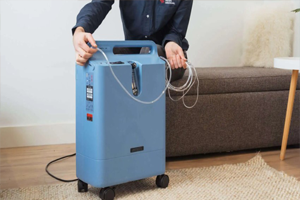
Oxygen Concentrator Uses & How It Works: Complete Guide for Home Use
What does an oxygen concentrator actually do?
Here’s the real answer.
- It’s not magic.
- It’s science.
- And it’s life-saving.
What Is an Oxygen Concentrator and How It Works?
An oxygen concentrator machine is simpler than you think.
Here’s what it does:
Step 1: Sucks air from the room (which is 21% oxygen, 79% nitrogen).
Step 2: Passes air through filters.
Step 3: Uses technology to separate nitrogen from oxygen.
Step 4: Delivers high-concentration oxygen (85-95%) to you.
Step 5: Repeats continuously.
That’s it.
No tanks. No refilling. No running out.
Just continuous oxygen on demand.
Why Not Just Use Oxygen Tanks?
- Good question.
- Oxygen tanks are temporary.
- They run out.
- You have to refill them.
- Hard to refill in Pakistan.
- Expensive to refill repeatedly.
A portable oxygen concentrator lets you move around without worrying about running out.
- But stationary models are even better because they’re plugged in 24/7.
- Continuous, unlimited supply.
How Much Oxygen Does It Deliver?
1-3 litre models: Low flow. For light use.
5 litre models: Standard flow. For regular use. Most common.
10 litre models: High flow. For serious cases or two people.
Liters per minute (LPM) is what matters.
Doctors prescribe a specific LPM based on blood oxygen levels.
You buy a concentrator that delivers that LPM.
Oxygen Concentrator Uses: Why Doctors Prescribe It?
Oxygen concentrator uses are specific.
Not for:
- Colds
- Anxiety
- General wellness
For:
- Serious lung disease
- Low blood oxygen
- Life-threatening conditions
Here are real uses:
Use 1: COPD (Chronic Obstructive Pulmonary Disease)
- Most common use.
- Lungs are damaged.
- It can’t extract enough oxygen from air.
Oxygen concentrator supplements what they can’t get.
- Patients use it 12-24 hours daily.
- Improves life expectancy. Improves quality of life.
Use 2: Post-COVID Lung Damage
- After severe COVID.
- Some people have permanent lung scarring.
- Low oxygen saturation (80-90%).
- Oxygen concentrator help them function.
- Some need it temporarily. Some need it long-term.
Use 3: Asthma Severe Attacks
- During bad asthma attacks.
- Oxygen saturation drops (below 90%).
- The emergency room gives oxygen.
- Then the patient goes home with oxygen concentrator machine for recovery.
Usually temporary, 2-4 weeks.
Use 4: Pneumonia or Severe Infection
- Lungs fill with fluid.
- It can’t absorb oxygen efficiently.
Oxygen concentrator maintains blood oxygen while the body heals.
- Temporary use, usually 1-3 weeks.
Use 5: Heart Failure
- The heart doesn’t pump blood efficiently.
- Lungs get congested.
- Oxygen can’t transfer.
Oxygen concentrator helps tide over crisis.
Use 6: Sleep Apnea (Severe)
During sleep, breathing stops.
Oxygen drops dangerously low.
Oxygen concentrator running at night prevents damage.
Use 7: Elderly Patients with Declining Lungs
- Old age. Weak lungs.
- Can’t extract enough oxygen anymore.
- Continuous low-level supplementation helps.
- Increases energy. Improves function. Better quality of life.
Use 8: Post-Surgery Recovery
- After major surgery, especially chest or abdominal.
- Lungs are temporarily weak.
- Oxygen concentrator speeds recovery.
- Usually 1-2 weeks.
Oxygen Concentrator for Home Use: Setup Guide
Oxygen concentrator for home use are becoming standard in Pakistan.
Here’s how to set it up correctly.
Step 1: Choose the Right Location
Good location:
- Well-ventilated room
- Close to outlet (so you don’t use extension cords)
- Near the patient’s bed or favorite chair
- Away from dust and humidity
- Away from flames or heat sources
Bad location:
- Bathroom (too humid, damages machine)
- Kitchen (too hot, risks damage)
- Corner with bad airflow (machine overheats)
- Basement (humidity ruins it)
Step 2: Get Proper Tubing and Mask
Comes with the machine:
- Nasal cannula (small tube in nose)
- Long tubing (connects cannula to machine)
- Adapters
Make sure:
- Tubing is the right length
- Cannula fits comfortably
- No kinks in tubing
- No leaks
Step 3: Electricity Setup
Need:
- Dedicated outlet (not shared with other devices)
- Grounded outlet (3-pin, not 2-pin)
- No extension cords if possible
- Backup power option (UPS or generator) for power cuts
Pakistan has frequent power cuts.
- Backup power is essential.
- Can’t risk going without oxygen when power fails.
Step 4: Daily Operation
Turn on: Press the power button. The machine starts humming.
Check oxygen output: Look at the flow setting. Adjust per doctor’s orders.
Check tubing: Make sure it’s connected and no kinks.
Put on cannula: Insert prongs gently in nose. Secure behind ears.
Breathe normally: Let the machine do its work.
Monitor: Check oxygen saturation every few hours (use pulse oximeter).
Step 5: Cleaning and Maintenance
Daily:
- Wipe outside of machine with damp cloth
- Check for dust
- Ensure vents aren’t blocked
Weekly:
- Rinse nasal cannula with mild soap and water
- Let it air dry
- Clean tubing with warm soapy water
Monthly:
- Deep clean the machine filter (follow manual)
- Check all connections are tight
- Look for wear and tear
Never:
- Use harsh chemicals
- Submerge the machine
- Use oil-based cleaning products
- Leave wet for extended time
Proper maintenance extends machine life to 7-10 years.
Poor maintenance kills it in 2-3 years.
Portable Oxygen Concentrator: Travel Guide
- Portable oxygen concentrator is different from a stationary.
- Smaller. Lighter. Battery-powered.
- But less powerful. More expensive.
When to Use Portable
- Hospital visits
- Visiting relatives
- Short trips (few hours)
- Short day outings
Portable Limitations
Battery life: Usually 2-4 hours max. Then it needs charging.
Output: Sometimes lower than stationary models. Check if it meets your prescription.
Price: ₨80,000-₨150,000. Much more expensive per litre.
Weight: Still heavy to carry. 4-5kg typical.
How to Manage Portable Use
For half-day outing:
- Charge fully before leaving
- Know oxygen requirement per hour
- Calculate if battery lasts the trip
- Have backup plan if battery dies
For full-day outing:
- Take stationary machine in car (if going by car)
- Use portable only for moving between locations
- Or stay close to power source
For travel:
- Check airline rules before flying with concentrator
- Some airlines allow it, some don’t
- Get doctor’s letter confirming medical need
- International rules vary
Oxygen Concentrator Generator: Backup Power
- Oxygen concentrator generator isn’t a concentrator.
- It’s backup power.
- Essential in Pakistan because of frequent power cuts.
Why You Need a Generator
- Electricity goes out.
- Oxygen concentrator machine stops working.
- The patient’s oxygen drops.
- Serious risk.
- A generator keeps the concentrator running during power cuts.
What Generator Size?
Oxygen concentrator power use: 300-500 watts typically.
Generator needed: 1000-2000W minimum (to handle startup surge).
Cost: ₨20,000-₨50,000 for adequate generator.
What Type of Generator?
Gasoline generators: Cheap upfront. Noisy. I need fuel. Need ventilation.
Solar with battery: Eco-friendly. Expensive. Quiet. I need a sunny location.
UPS (Uninterruptible Power Supply): Best for short cuts. ₨15,000-₨30,000. Handles 2-4 hours.
Inverter + Battery: Most reliable. ₨30,000-₨80,000. Can run 6-10 hours.
Best option: Inverter with good battery.
Covers most power cuts (which are usually 2-4 hours).
Oxygen Concentrator 3 Litre: Small But Useful
Oxygen concentrator 3 litre is the smallest standard model.
Price: ₨20,000-₨35,000
Who Uses 3L?
- Infants (rarely, usually not used)
- Supplemental oxygen only (not primary)
- Portable use (lighter than 5L)
- Temporary short-term use
3L Limitations
Only 3 litres per minute output: Not enough for many patients.
- Doctors usually prescribe 4-6 LPM.
- 3L can’t deliver that.
- So 3L is uncommon for actual treatment.
Mostly for:
- Elderly with very mild oxygen need
- Temporary use during recovery
- Portable supplemental oxygen
3L Decision
- Unless doctor specifically prescribes 3L:
- Skip it. Get 5L instead.
- 5L is barely more expensive.
- Much more useful.
- It won’t outgrow it as fast.
Oxygen Concentrator Portable: Pros and Cons
Real honest assessment:
Pros:
- Can carry with you
- Some freedom of movement
- Battery backup option
- Good for short trips
Cons:
- Very expensive (₨80,000-₨150,000)
- Battery lasts only 2-4 hours
- Less powerful than stationary
- Heavy to carry actually (4-5kg)
- More fragile (more moving parts)
- Needs frequent battery replacement
- Batteries cost ₨5,000-₨10,000 to replace
Real Talk:
Most people who buy portables regret it.
- They’re expensive but don’t solve the problem.
- Better solution: Get a stationary concentrator + car outlet inverter.
- Car outlets supply power while traveling.
- Much cheaper total cost.
- Better long-term solution.
Common Mistakes with Oxygen Concentrators
“I’ll buy used to save money.”
Used machines are risky. Previous damage isn’t obvious. Buy new.
“I’ll run it in humid bathroom.”
Humidity kills the machine. Ruins it. Don’t do this.
“I don’t need maintenance.”
Poor maintenance destroys machines. Regular cleaning extends life.
“Three litres is enough.”
Usually not. 5L is standard for a reason. 3L is too weak.
“I can skip the generator.”
Power cuts will happen. You’ll regret not having backup.
“Portable concentrator is as good as stationary.”
No. Portable is a supplement. Stationary is the real solution.
“I’ll extend the tubing 20 meters.”
Long tubing reduces pressure. The machine won’t work properly. Keep it under 2 meters.
“I don’t need a pulse oximeter.”
How will you know if oxygen is working? Monitor blood oxygen. Buy pulse oximeter (₨3,000-₨8,000).
Oxygen Concentrator Maintenance Schedule
Daily:
- Check filter isn’t clogged
- Wipe exterior
- Check all connections
Weekly:
- Clean nasal cannula
- Inspect tubing for cracks
- Check oxygen flow is normal
Monthly:
- Deep clean air filter
- Test battery (if portable)
- Listen for unusual sounds
Every 6 months:
- Professional servicing (if available)
- Complete filter replacement
- Tubing replacement if worn
Yearly:
- Full inspection
- Parts replacement as needed
- Performance verification
Maintenance costs: ₨2,000-₨5,000 per year usually.
Worth it to extend machine life.
FAQs
Q: How do I know if oxygen concentrator is working?
A: Check oxygen flow is visible (usually shown as “2L”, “5L” etc.). Check tubing has oxygen (put hand near outlet, feel air pressure). Use pulse oximeters to confirm blood oxygen has improved.
Q: Can oxygen concentrator cause fire or explosion?
A: No. It’s not fuel. But keep away from flames because high oxygen increases burn risk. No smoking near the concentrator.
Q: What’s normal oxygen concentrator noise level?
A: 40-60dB. Similar to air conditioners. Louder than the refrigerator. If it gets much louder, there’s a problem.
Q: How long can I use oxygen concentrator daily?
A: As long as needed. 24/7 if prescribed. Many patients use it 12-16 hours daily.
Q: Can two people share one concentrator?
A: No. One concentrator = one patient. Two people need either two machines or one very high capacity machine (10L+).
Q: Is oxygen addictive?
A: No. Your body can’t become dependent on oxygen. It’s necessary for life. Safe to use continuously.
Q: What if oxygen concentrator stops working suddenly?
A: First, check if it’s plugged in. Check outlet works. The check filter isn’t clogged. If it still doesn’t work, call a technician. Meanwhile, if a patient needs oxygen urgently, go to hospital.
Q: Can children use oxygen concentrator?
A: Yes, with proper mask fitting. Usually doctors prescribe lower flow rates for children. A child’s nasal passages are smaller, so mask fit is critical.
Q: What oxygen saturation level requires concentrator?
A: Generally, below 90% needs supplemental oxygen. Normal is 95-100%. The doctor prescribes based on the patient’s specific saturation levels.
Q: How often does oxygen concentrator need servicing?
A: Every 6-12 months depending on use. Daily use = more frequent servicing. Occasional use = less frequent.
The Real Truth About Oxygen Concentrators
Here’s what matters:
- An oxygen concentrator machine is life-saving.
- It’s not optional if the doctor prescribes it.
- Maintain it properly.
- Don’t cheap out on quality.
- Get backup power.
- Use it exactly as prescribed.
- Check oxygen levels regularly.
- Follow the cleaning schedule.
Your life depends on it.
That’s everything about oxygen concentrator uses, oxygen concentrator machine, portable oxygen concentrator, oxygen concentrator generator, oxygen concentrator for home use, and oxygen concentrator 3 litre.
Real knowledge. Real help. Real life-saving information. You can buy any medical equipment with quality assurance from Esmarthomehealthcare.
You can also Read: Nebulizer Price in Pakistan: Complete Guide 2026
Comments are closed